Choosing the Right Paint Sheen for New Hampshire Homes
Gary · · 11 min read
Discover the best paint sheen for your New Hampshire home with Legacy Brushworks. Call now for a free in-person consultation and expert guidance.
Choosing the right paint sheen for every room in your home is not about aesthetics alone—it is about durability, cleanability, and how light behaves on the surface. Homeowners in Manchester, Concord, Nashua, and surrounding New Hampshire communities often pick a single sheen for the entire interior and later regret it when high-traffic areas scuff, bathroom walls hold moisture, or living rooms look flat under natural light. Legacy Brushworks brings 25 years of trade experience to every project, including complimentary color consultations that cover sheen selection by room. Gary Debreceni walks the property with you, reviews how each space is used, and recommends finishes that match the function—not a one-size-fits-all approach that ignores the difference between a kitchen and a bedroom.
Why Paint Sheen Matters in New Hampshire Homes
Paint sheen refers to the level of gloss or reflectivity in the dried film. The spectrum runs from flat (also called matte) to high-gloss, with eggshell, satin, and semi-gloss in between. Each sheen has trade-offs. Flat finishes hide surface imperfections and absorb light, making them ideal for low-traffic spaces with textured walls. Glossier finishes reflect more light, resist moisture and scrubbing, and show every drywall imperfection. New Hampshire homes—especially older properties in Bedford, Goffstown, and Hooksett—often have walls that have been patched, replastered, or repaired over decades. The sheen you choose will either conceal those repairs or spotlight them under raking light from windows facing south or west.
Sheen also affects maintenance. Kitchens, bathrooms, hallways, and mudrooms take more wear than guest bedrooms or formal dining rooms. A sheen that cannot be wiped down will show every fingerprint, splash, and scuff within weeks. A sheen that is too glossy will highlight every nail pop and joint line. The goal is to match durability and appearance to how the room is actually used, not to what looked good on a sample card under fluorescent store lighting.
Flat and Matte Finishes: When to Use Them
Flat and matte finishes have little to no sheen. They absorb light rather than reflecting it, which makes them forgiving on walls that are not perfectly smooth. Older plaster walls, ceilings with minor texture, and surfaces that have been patched and repaired often look better in flat finishes because imperfections do not catch the light. Flat paint is also less likely to show lap marks during application, which matters on large open walls in living rooms or primary bedrooms.
However, flat finishes are harder to clean. They are porous, so dirt and oils from fingerprints soak in rather than sitting on the surface. Scrubbing can burnish the finish and leave shiny spots. For that reason, flat paint is best reserved for ceilings, adult bedrooms, formal dining rooms, and other low-traffic areas where walls are not frequently touched. It is also a good choice for older homes in Concord or Manchester where uneven plaster or multiple repair patches would show through a glossier finish.
Best Uses for Flat and Matte Paint
- Ceilings: Flat white on ceilings minimizes texture shadows and keeps attention on the walls and furnishings, not overhead imperfections.
- Adult bedrooms: Low traffic and infrequent wall contact make flat finishes practical, and the lack of sheen creates a softer, more restful appearance.
- Formal spaces: Dining rooms and home offices used primarily by adults benefit from the refined look of matte walls without gloss.
- Textured or imperfect walls: Homes built before 1950 often have plaster that has been patched, and flat finishes help those repairs disappear.
If you are unsure whether your walls can support a flat finish, an in-person estimate is more useful than guessing. We look at the surface condition, lighting, and how the room is used before recommending a sheen. That assessment is part of every free estimate, available 7 days a week from 8 AM to 7 PM.
Eggshell Finishes: The Most Common Interior Choice
Eggshell is a low-luster finish that sits between flat and satin. It has just enough sheen to be wipeable without looking glossy. The name comes from the subtle sheen of a chicken eggshell—visible in angled light but not reflective in the way satin or semi-gloss finishes are. Eggshell is the most commonly specified sheen for interior walls in New Hampshire homes because it balances durability and appearance across a wide range of spaces.
Eggshell can be gently cleaned with a damp cloth or sponge, making it suitable for living rooms, hallways, and bedrooms that see moderate traffic. It hides minor wall imperfections better than satin or semi-gloss, but it is more durable than flat. Many homeowners in Nashua, Bedford, and Londonderry choose eggshell for whole-house interior painting projects because it works in most rooms without requiring multiple product orders or sheen transitions mid-project.
Where Eggshell Finishes Work Best
- Living rooms and family rooms: Eggshell holds up to everyday use without looking industrial or overly shiny.
- Bedrooms: It provides a subtle warmth and can be wiped down if needed, which is helpful in children's rooms or guest spaces.
- Dining rooms: The low sheen adds a touch of elegance without the sterile look of glossier finishes.
- Hallways and entryways: These high-touch zones benefit from eggshell's cleanability, though satin may be a better choice in homes with young children or pets.
Eggshell is also easier to touch up than flat. If a section of wall is scuffed or damaged, a small repair and touch-up coat will blend more seamlessly than with higher-gloss finishes, which can flash or show lap marks under certain lighting. That makes eggshell a practical long-term choice for homeowners who want a finish that looks good and can be maintained without full repaints every few years.
Satin Finishes: Durability for High-Traffic Areas
Satin finishes have a soft, velvety sheen that is more reflective than eggshell but less mirror-like than semi-gloss. Satin paint is more durable and easier to clean, which makes it the preferred choice for high-traffic areas, kitchens, bathrooms, and homes with children or pets. The additional sheen comes from a higher resin content, which creates a tougher, more washable film. Satin can handle repeated scrubbing without burnishing or losing its finish.
However, satin reflects more light, so it will show wall imperfections more readily than eggshell or flat. Homes in Derry, Merrimack, and Salem with newer drywall or well-prepped walls can use satin throughout without issue. Older homes with uneven plaster, visible seams, or patched areas may want to reserve satin for trim and high-use walls rather than applying it to every surface. When in doubt, we bring samples to the property during the complimentary color consultation so you can see how the sheen behaves in your actual lighting.
Ideal Applications for Satin Paint
- Kitchens: Satin withstands grease, splashes, and frequent wiping without damage, making it a practical choice for kitchen walls.
- Bathrooms: The moisture resistance and cleanability of satin make it suitable for full bathrooms and powder rooms, though semi-gloss is often used on trim and wainscoting.
- Hallways and staircases: These areas see constant hand contact, and satin holds up better than eggshell or flat without looking too shiny.
- Children's rooms and playrooms: Satin can be scrubbed clean after marker, crayon, or sticky fingerprints, which makes it the go-to finish for homes with young children.
- Mudrooms and laundry rooms: High humidity and frequent contact make satin the minimum recommended sheen for these spaces.
Satin is also the most common choice for cabinet refinishing projects where a soft, durable finish is needed on doors and drawer fronts. It provides a modern look without the high-gloss appearance of lacquer or the flatness of matte cabinetry. We use satin on cabinetry in kitchens throughout Bow, Hudson, and Hooksett where homeowners want an updated appearance without full replacement.
Semi-Gloss and High-Gloss: Trim, Doors, and Moisture-Prone Surfaces
Semi-gloss and high-gloss finishes are the most durable and washable options available. They are also the most reflective, which means they show every surface defect, brush mark, and application flaw. For that reason, semi-gloss and gloss are typically reserved for trim, doors, window sashes, and other surfaces that need to withstand repeated cleaning or moisture exposure. These finishes are common in older New Hampshire homes where trim was historically painted in a contrasting gloss to highlight architectural details and allow for easy maintenance.
Semi-gloss is the standard choice for interior trim, baseboards, door frames, and crown molding. It provides a crisp, clean edge against walls painted in eggshell or satin and can be wiped down without damage. High-gloss is less common but still used on doors, cabinetry, and furniture-grade millwork where a mirror-like finish is desired. Gloss finishes are also used in bathrooms on wainscoting, beadboard, and other areas exposed to steam and splashing.
Where Semi-Gloss and Gloss Finishes Belong
- Interior trim and baseboards: Semi-gloss is the default for trim in most New England homes, providing contrast and durability along floors and doorways.
- Doors and door frames: Doors are touched constantly, and semi-gloss holds up to that wear better than any lower-sheen option.
- Window sashes and sills: Moisture from condensation and UV exposure make semi-gloss the right choice for window trim.
- Bathroom wainscoting and beadboard: Semi-gloss or gloss finishes protect wood surfaces in high-humidity environments and can be scrubbed clean.
- Kitchen cabinets: While satin is common, some homeowners in Manchester and Concord prefer semi-gloss for a more traditional or formal cabinet finish.
Applying semi-gloss and gloss finishes requires careful surface preparation. Any drywall imperfection, sanding scratch, or uneven primer coat will show under these finishes. That is why we sand, prime, and inspect trim before applying the final coats. The result is a smooth, even finish that reflects light cleanly rather than highlighting flaws. Homes with historic trim or custom millwork benefit from this level of attention, and it is part of the standard process on every project we take on.
Matching Sheen to Surface Condition and Lighting
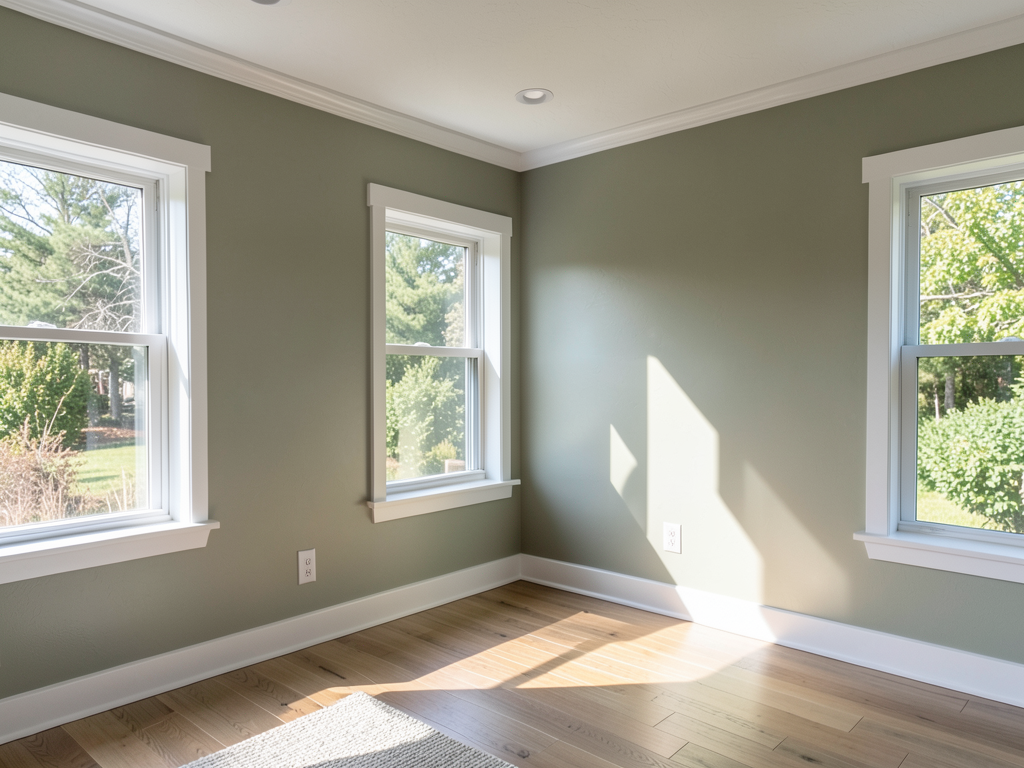
The condition of your walls and the direction your windows face both influence sheen selection. South-facing rooms in Goffstown or Bedford receive strong, direct sunlight for much of the day. That light will highlight every imperfection on the wall, making flat or eggshell finishes a safer choice than satin or semi-gloss. North-facing rooms receive softer, indirect light and can handle slightly glossier finishes without every drywall seam becoming visible.
Older homes often have plaster walls that have been patched multiple times. Even with careful drywall repair, slight variations in texture remain. Flat or eggshell finishes help those repairs disappear. Newer construction with smooth, well-taped drywall can support satin or semi-gloss finishes without issue. If you are unsure, we bring sheen samples to the property and hold them against the wall in the room's actual lighting so you can see the difference before any paint is applied.
How Legacy Brushworks Helps You Choose the Right Sheen
Complimentary color consultations at Legacy Brushworks include sheen guidance by room. Gary walks through the house with you, reviews how each space is used, looks at wall condition and lighting, and recommends finishes that match the function and appearance you want. That consultation happens at the property—not over the phone or from photos—because sheen looks different in your home than it does on a sample card under store lighting.
We also discuss product type during the estimate. Not all paints perform the same way, even within the same sheen category. Some manufacturers' eggshell finishes are closer to satin, while others lean flat. We choose products based on surface type, climate, and how the room will be used, not based on what is on sale or easiest to source. That selection process is part of the 25 years of trade experience that Gary brings to every project, and it is included in every free in-person estimate.
Common Sheen Mistakes and How to Avoid Them
One of the most common mistakes is using the same sheen throughout the house without considering room function. Flat paint in a kitchen will show stains and be difficult to clean. Semi-gloss in a bedroom will look sterile and highlight every wall flaw. Another mistake is choosing sheen based on appearance alone, without factoring in durability. A beautiful flat finish in a hallway will scuff and burnish within months if the household includes children or pets.
Another issue is applying glossy finishes over poorly prepped surfaces. Semi-gloss will not hide bad drywall work—it will showcase it. If the walls have not been sanded, primed, and inspected, a high-sheen finish will amplify every flaw. That is why surface preparation matters as much as the paint itself, and why we do not skip sanding or priming steps to speed up the job. Prep is where the quality shows, and it is the difference between a finish that looks professional and one that looks rushed.
Seasonal Considerations for Interior Painting in New Hampshire
Interior painting can happen year-round in New Hampshire, but winter projects require attention to ventilation and humidity. Homes in Londonderry, Salem, and Hudson are often closed up tight during cold months, which slows drying times and can trap paint odor. We plan ventilation and product selection around the season, choosing low-VOC or zero-VOC paints when air exchange is limited and timing coats to allow proper curing between applications.
Sheen selection also interacts with seasonal lighting. Rooms that feel bright and airy in summer can look flat and dim in winter when daylight hours are shorter. A slightly higher sheen—moving from flat to eggshell, or eggshell to satin—can help rooms feel more luminous during New England's darker months. That is another reason we recommend in-person consultations: the lighting in your home changes with the season, and the sheen that works in July may not feel the same in January.
Why Owner-Operated Matters for Sheen Selection and Application
Legacy Brushworks is owner-operated by Gary Debreceni, which means the person who walks the estimate is the same person accountable for the finished work. You do not hand off sheen decisions to a crew that has never seen your house. You do not explain your preferences twice to different people. Gary discusses sheen, product, and application method with you during the estimate, and that plan carries through to the final walkthrough.
That continuity matters because sheen selection is not a checklist item—it is a judgment call that requires looking at the room, understanding how it is used, and knowing how different products perform on different surfaces. Twenty-five years of trade experience informs those recommendations, and a 3-year quality guarantee backs the workmanship. Small and large projects are both welcome, and the process stays the same whether you are repainting one bedroom or an entire home.
Schedule Your Free In-Person Estimate
If you are planning an interior painting project in Manchester, Concord, Nashua, Bedford, Goffstown, Hooksett, Londonderry, Derry, Merrimack, Salem, Hudson, Bow, or anywhere in New Hampshire, Legacy Brushworks provides free in-person estimates 7 days a week from 8 AM to 7 PM. The estimate includes a complimentary color consultation, sheen guidance by room, and a written scope so you know what is included before any work begins. Contact us at (351) 215-0110, email pros@legacybrushworks.com, or request an estimate online at legacybrushworks.com/contact. The person who estimates the job is accountable for the finish, and every project includes a final walkthrough before it is called complete.
Start Your Project with a Free Estimate
Painting for homes and businesses across Concord, Manchester, Nashua, Bedford, Goffstown, Hooksett, Londonderry, Derry, Merrimack, Salem, Hudson, and Bow.
Free estimates 7 days a week, 8 AM–7 PM | Owner-operated by Gary Debreceni